

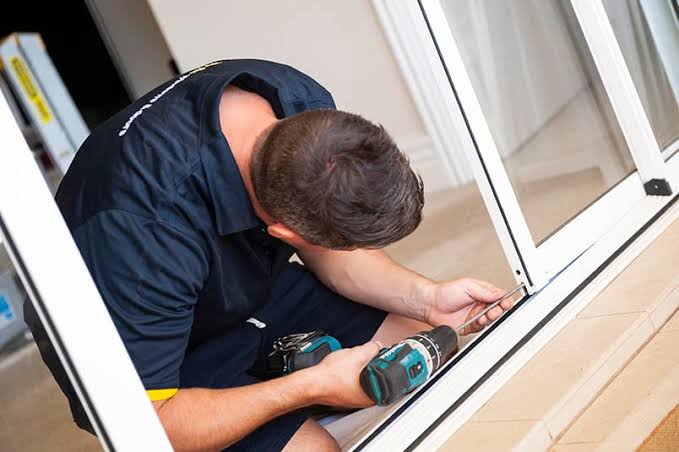
It doesn’t look capable of doing much.
A tiny piece of gravel gets kicked into the bottom track of a patio door. Nobody notices it. The door closes normally, perhaps with a faint crunch, and life carries on.
Then it happens again.
Over the following weeks, garden grit, dried mud, pet hair and small stones accumulate in the track. A heavy glass door continues travelling backwards and forwards across the debris, sometimes several dozen times a day.
Eventually, the door doesn’t slide quite as nicely as it used to.
This is one of the less dramatic causes of problems with sliding patio doors, but it is also one of the most avoidable. People naturally worry about locks, handles and complicated mechanisms. They rarely give much thought to the strip of metal underneath their feet.
Perhaps they should.
A patio door track has a fairly thankless job.
The garden has moved closer to the kitchen
The way we use the back of our homes has changed considerably.
Years ago, a patio door might have been opened on warm weekends and occasionally when somebody wanted to put the washing out.
Now the boundary between kitchen and garden is deliberately blurred.
Extensions have become larger. Patios sit level with internal floors. Bifold and sliding doors can span almost the entire back wall. Dogs wander in and out. Children treat the garden as another room.
It looks better.
It also means external door tracks are exposed to far more contamination.
Think about what comes through a typical doorway during a summer afternoon.
Dry soil. Grass. Tiny pieces of gravel. Sand from paving joints. Bits of leaves. Dog hair. Crumbs from whatever the children are eating outside.
None of it looks particularly threatening.
Put it underneath a heavy sliding door and things change.
Some modern glazed panels are extremely heavy. Every time that weight passes over trapped debris, the roller and track are effectively crushing it together.
Do that thousands of times and wear starts to show.
Listen to the door
One of the earliest warnings is often audible.
A healthy sliding system shouldn’t sound as though it is grinding its way across the opening.
There will naturally be some noise. It is a large moving object, not a kitchen drawer.
But crunching, scraping and intermittent roughness deserve attention.
The problem is people get used to noises.
Something changes gradually and the household adapts. A patio door becomes 5% noisier one year, then another 5% the next. Nobody notices because there isn’t a single moment when it obviously breaks.
Visitors sometimes notice first.
“Your door’s a bit heavy.”
That’s when the owner realises they have been putting their shoulder into it for the last two years.
A lot of household maintenance works like this. Slow deterioration becomes normal because we experience it every day.
Rollers don’t enjoy running through gravel
Sliding patio doors rely on rollers underneath the moving panel.
The precise arrangement varies between systems, but the basic principle is straightforward enough. Instead of dragging the full weight of the door directly along the frame, rollers allow it to travel smoothly across a track.
Once those rollers become damaged, movement deteriorates quickly.
A tiny hard stone can interfere with the running surface. Repeated contamination can damage both the roller and the track it travels along.
This is particularly problematic if the roller itself has already started wearing.
A good roller travelling over a clean track has a relatively easy life.
A worn roller travelling over a dirty, damaged track doesn’t.
At that point the homeowner often tries the obvious solution.
Lubricant.
Lots of it.
Please stop spraying everything
There are situations where appropriate lubrication is useful.
There are also situations where spraying oily products into a track full of dirt achieves roughly the opposite of what was intended.
The liquid traps debris.
Dust sticks to it. Fine grit becomes suspended in it. Pet hair gets tangled through it.
You’ve effectively created an abrasive paste and placed it exactly where your rollers travel.
It might feel slightly better for a day or two.
That doesn’t mean you’ve fixed anything.
This is a surprisingly common pattern with older doors. By the time somebody actually investigates the problem, the bottom track contains several years’ worth of dirt mixed with repeated applications of whatever lubricant happened to be in the garage.
Cleaning it isn’t particularly glamorous.
It is still better than pretending another spray will fix a damaged roller.
The track itself can become the expensive bit
This is where a small maintenance issue can become a proper repair.
People tend to assume rollers are the component worth protecting.
The track matters too.
If damaged running gear continues travelling repeatedly across the same surface, it can score, deform or otherwise damage the track. Once that happens, simply replacing the roller may not restore smooth movement.
The new component is still travelling across a compromised surface.
You can see the problem.
It is similar to fitting a new tyre to a wheel with another underlying fault. Changing the obvious worn component doesn’t automatically correct everything that caused it.
This is why diagnosing stiff patio doors properly matters.
Sometimes the rollers are finished.
Sometimes the track is damaged.
Sometimes both are suffering because the door hasn’t been aligned correctly for years.
And sometimes there is simply a small stone wedged somewhere irritating.
Those are four very different jobs.
Bifold tracks suffer in a slightly different way
Bifold doors have their own relationship with garden debris.
The openings are often wider, which means more exposed track. They also tend to be installed precisely because homeowners want that uninterrupted connection between an extension and the garden.
On a sunny day, the doors can remain folded back for hours.
Plenty of opportunity for debris to find its way inside.
Then, towards evening, all the panels are pulled back across the opening.
Crunch.
People hear it and carry on.
Repeated often enough, contamination can contribute to damaged running gear and increasingly rough movement. If the bifold system is already slightly out of alignment, the effect becomes more noticeable because the rollers aren’t travelling as cleanly as they should anyway.
That is why keeping tracks clear is such a basic part of preventing unnecessary bifold running gear problems.
It isn’t sophisticated maintenance.
A vacuum cleaner does a surprising amount of useful work.
Pets are particularly good at filling tracks
Dog owners will know this one.
A wet dog comes charging indoors carrying half the garden between its paws.
Mud goes everywhere.
Larger pieces are obvious and get cleaned. Fine grit settles into corners, thresholds and door tracks.
Repeat that every wet day for several winters.
West Yorkshire provides plenty of opportunities.
Homes in areas with gravel gardens or loose stone paths tend to suffer particularly badly because the material naturally migrates towards entrances. A few pieces stick in shoe treads, others get kicked forward, and eventually some land exactly where you don’t want them.
Properties with paved gardens aren’t immune either.
Weathering jointing compounds and deteriorating paving can produce surprisingly abrasive particles.
The cleaner the transition between garden and internal floor looks architecturally, the easier it often becomes for debris to travel straight inside.
There is an irony there somewhere.
Flush thresholds are brilliant until they’re filthy
Modern homeowners understandably like low thresholds.
Nobody wants an enormous step between a new kitchen extension and the patio. Flush or nearly flush installations make spaces feel continuous and improve accessibility.
They also put the running system very close to everything happening outside.
Rainwater, dust and garden debris have fewer obstacles between themselves and the track.
Good drainage and installation design should manage the weather side of things.
They cannot stop somebody kicking a pebble indoors.
That still requires boring old-fashioned cleaning.
And because the track sits at floor level, it is remarkably easy to ignore. People vacuum around it rather than inside it.
The visible surfaces look clean.
Underneath the moving panel can be a different story.
Children are not gentle test engineers
A family patio door lives a very different life from one in a quiet two-person household.
Children don’t necessarily notice that a door has started becoming stiff.
They pull harder.
If something is caught in the track, they’ll often keep pulling until the door gets past it.
That is fairly normal behaviour. Nobody expects an eight-year-old to conduct a mechanical inspection before going into the garden.
But it does demonstrate why early symptoms matter.
A slightly damaged system being operated carefully by an adult might continue functioning for months.
The same door opened and closed repeatedly by several people every day experiences much more strain.
Add pets, summer barbecues and children constantly moving between house and garden and the opening cycles mount surprisingly quickly.
The modern patio door is no longer an occasional-use feature in many homes.
It is effectively another main entrance for half the year.
Dirt can disguise another problem
Here is where things become less straightforward.
You clean the track thoroughly.
The door is still heavy.
Now what?
That is the point where guessing becomes less useful.
A sliding door that remains stiff with a clean track may have worn or damaged rollers. It could have dropped slightly. The running surface might already be damaged. There may be an alignment issue elsewhere in the frame.
The lock can also become involved.
If the door no longer arrives squarely at the closing position, locking points can start meeting their keeps incorrectly. The handle becomes harder to operate and suddenly what began underneath the door is affecting components halfway up it.
This is why experienced repairers tend to look at the complete system rather than whichever part the homeowner initially identifies.
People understandably describe symptoms.
“The lock is stiff.”
“The handle is broken.”
“The door won’t slide.”
Finding the reason is the actual job.
A dirty track doesn’t mean neglect
There is no need to turn this into another household chore people feel guilty about.
Some tracks get dirty incredibly quickly.
A door used constantly through a West Yorkshire winter can collect debris only days after being cleaned. Houses with pets, young children or exposed gardens are always going to require more attention than pristine showroom installations.
The point isn’t to maintain surgical cleanliness.
It is to prevent significant debris remaining underneath heavily loaded moving components for months at a time.
If you can hear stones being crushed when the door moves, that’s probably worth dealing with.
Low bar.
Older sliders deserve a bit of sympathy
Some sliding patio doors have been doing this job for twenty years.
Maybe longer.
They’ve survived thousands of wet days, muddy shoes, footballs hitting the glass, dogs scratching at them and generations of children treating the handle with absolutely no mechanical sympathy.
Then one day they become stiff and somebody declares the whole door finished.
Not always fair.
Older sliding systems can be surprisingly robust. Many problems come from serviceable components rather than fundamental failure of the entire frame.
Rollers can wear.
Mechanisms can fail.
Alignment can drift.
Parts availability becomes more complicated on discontinued systems, admittedly, but age by itself doesn’t mean replacement is automatically sensible.
This matters more now because households are scrutinising renovation spending carefully.
Replacing a complete glazed door system because a moving component has worn out can be a very expensive way of addressing a relatively contained problem.
Repair first is becoming a much more common conversation.
The summer clean matters more than the spring clean
Late summer is actually a useful time to look at these systems.
Doors have often been used heavily for several months. Gardens have been dry enough to produce dust and grit. Barbecues, children and pets have all done their bit.
Then autumn approaches.
The doors begin spending more time closed. Rain becomes more persistent. Moisture mixes with whatever has accumulated during summer.
That is when neglected tracks can become particularly unpleasant.
A quick clean before wetter weather returns is hardly an exciting weekend project.
Five minutes with a vacuum cleaner will not make the neighbours jealous.
It may be rather more useful than some of the home maintenance jobs that get far more attention.
Don’t keep pulling harder
This is probably the simplest rule.
A sliding door that suddenly requires noticeably more effort is telling you something.
Maybe the track needs cleaning.
Maybe a roller has deteriorated.
Maybe alignment has shifted.
Maybe there really is a tiny stone stuck somewhere underneath.
But heavier movement shouldn’t simply become the new normal.
Once people start compensating with additional force, secondary damage becomes much more likely. Handles are pulled harder. Locks meet frames badly. Rollers travel under loads they were not supposed to experience.
Eventually the repair grows.
The irritating thing is that the original cause can be ridiculously small.
Sometimes several millimetres small.
A pebble doesn’t know that the glass panel above it cost thousands of pounds.
It just sits there while the door rolls over it again.
And again.
And again.
 Joseph Thompson